
D-LABS turned 20!

D‑LABS has been developing digital products and services in use around the globe for 20 years now. Our solutions and workflows designed and implemented by our experts in Potsdam, Berlin and Stuttgart make people’s daily work and lives easier every day – at public offices right next door, for example, or global players headquartered in Silicon Valley. D-LABS is and remains deeply rooted in Potsdam.
Our early beginnings
D-LABS was founded in June 2006 as one of the first spin-off companies of the Hasso Plattner Institute (HPI) and has been committed to the principles of Human-Centered Design from the very beginning. Methods such as Design Thinking had only recently been developed in the U.S.; they hadn’t made their way to Europe yet, let alone Germany. HPI’s d-school didn’t exist yet. Some of our clients were hearing the terms user experience and usability for the first time. A common notion at the time: Design comes last. Even the role of user researcher was nowhere to be found on the job market; D-LABS hired people with degrees in psychology and sociology instead.

A snap shot from 2007: Jörn and Marc at Campus Griebnitzsee close to HPI.
We were pioneers in our field. Unlike traditional software development, we focused on gaining a deep understanding of the context of use, the user’s pain points and needs. Always design first! This is the only way to create digital solutions that truly resonate with their users and run at their full potential. In our very first marketing video from 2007, Jörn — now the CEO of D-LABS — said in an interview:
To be able to plan and develop the optimal software, it’s not enough to know the needs and requirements of the end users. You have to think and feel like them.
Simplicity Works
…so our former claim! Between 2010 and 2020, D-LABS evolved from a HPI startup to a name our clients and project partners associate with creative approaches and simple solutions to complex challenges. Innovation aside, many of our projects centered around digitizing previously analogue processes using custom business software. Simplifying and optimizing the target process steps remains a key component to unlocking the true potential of digital transformation.
Since in-person interviews, design validations, and workshops were the norm at the time, our user researchers, digital experience designers, software engineers, and consultants traveled throughout Germany — and sometimes around the world. Our project work got us around not only in a geographic sense. On-site user research meant getting to know and observe the work of people in various roles within the context of their daily activities to generate insights for new products and services.
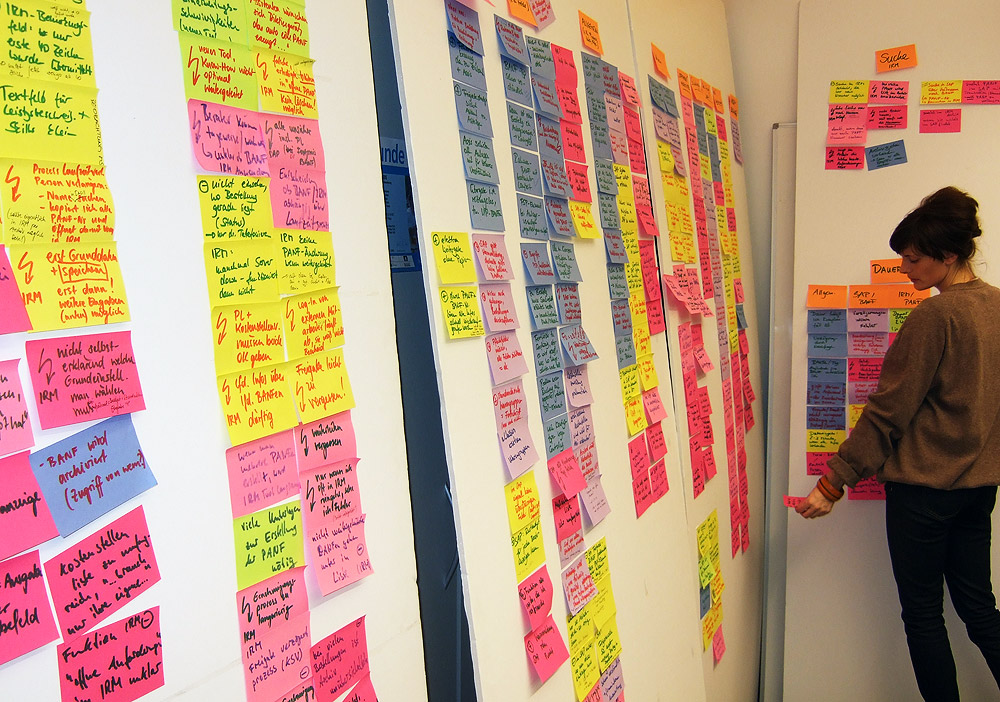
A typical sight at the time: Digital Experience Designer Angela sorts through insights on portable boards.
Senior User Researcher Christina has been working for D-LABS since 2013. She recalls an interview for the digital VetCenter by the publisher Thieme with a veterinarian at his office which she conducted with a fluffy cat on her lap. Or the time she had to book a venue in central Germany for a focus group discussion for a client whose team was spread across the country. Efficient interviews and validations via video calls? No chance! The tools for e.g. sharing screens online simply weren’t ready yet.
Christina explains:
Before the pandemic, user research produced those typical colorful walls. We went through a lot of pens and post-its, drawing artifacts like user journeys and personas by hand on whiteboards. We documented interviews using audio recorders, and manually tracked a user’s click paths during validation sessions. We only started working fully digital when it came to presenting the insights and recommended action steps.
We moved into our new Potsdam headquarters in 2019 towards the end of this era. We equipped it with everything a user-centered heart desires: flexible workshop spaces, open desk offices, a big kitchen serving as a collaboration space, and plenty of whiteboards. We were ready for another decade of business as usual.
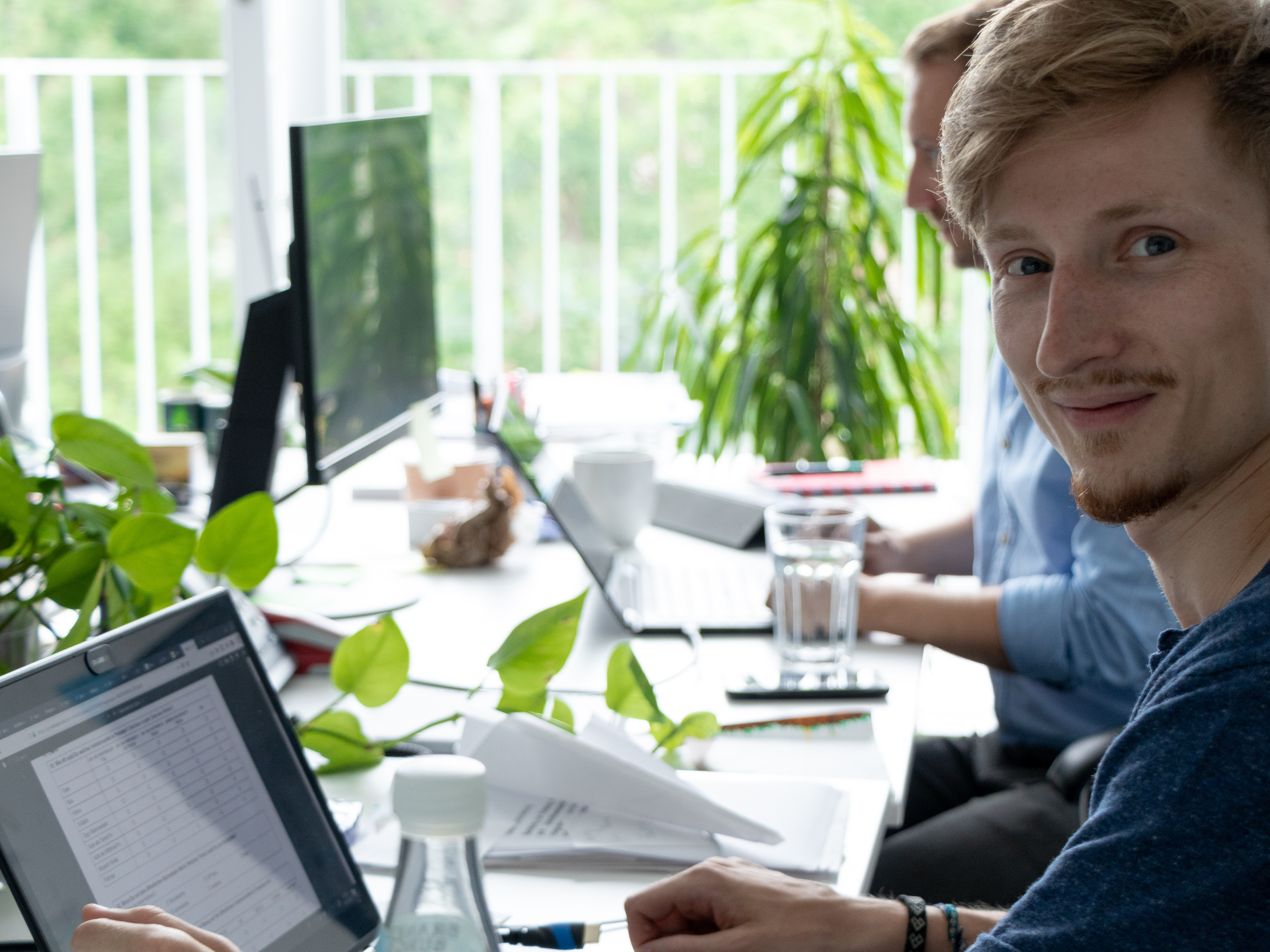
Just after the movie into our new office: Software Engineer Philipp at work.
The transformation of digital work and the pandemic
This paradigm was brought to a swift end by the year 2020. For some of our project teams, the news of the pandemic lockdowns and Covid-19 safety measures burst into the middle of on-going workshops. Director Digital Experience Design Claudia vividly remembers having to move sessions for a water utility company to an online format overnight. For a different project with a German federal agency, huge conference rooms were booked for validation and co-creation sessions to ensure the minimum distance between participants once in-person meetings were permitted again.
Claudia summarizes:
The pandemic forced us to try out new methods and approaches via trial and error. What works? What doesn’t? Quickly building up the technical proficiency of our client’s teams became part of our jobs to ensure effective digital collaboration. Without this emergency, the working world would have taken years to complete a transformation this intense.
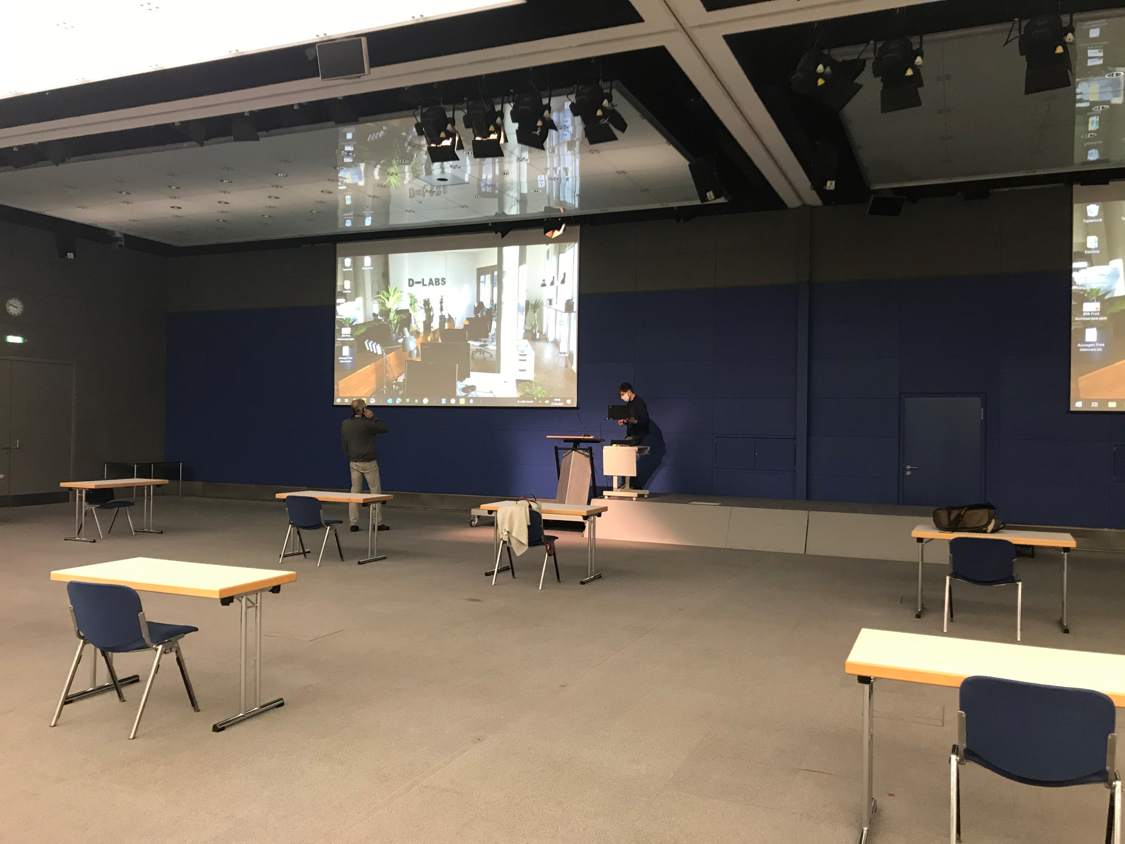
An unusual workshop setting: Preparations for the session with safety measures in place.
As a design company specialized in digital products and services, D-LABS was fairly well-prepared for this extraordinary situation. We still had to get used to fully remote ways of working. Workshop rooms previously bustling with activity now stayed empty. Our hybrid team meetings in Berlin, Potsdam and Stuttgart turned into remote sessions from our offices at home, and in place of our shared lunch breaks, we were planning our traditional party for the holidays on Microsoft Teams (with festive meals delivered via team members).
While challenging, each new situation presented us with an opportunity to develop new methods and to understand and implement transformation on an whole new level… for our clients and ourselves. The rapid proliferation of digital collaboration and video conferencing tools made working with international project partners significantly easier. We led the development of solutions within global teams without ever having to board a plane. This has permanently transformed D-LABS. At the same time, it became clear that human-centered product development without human contact is neither feasible nor desirable in the long run.
Our new normal
It’s easy to track these changes in the rearview mirror. You can draw a line, sometimes straight, sometimes winding, between these experiences and the strategic decisions that define current day D-LABS. Having arrived in the present, we know how to consciously leverage the benefits of a variety of frameworks more effectively. We work in digital, international, agile and consistently human-centered ways, and remain true to the principles that have proven their worth time and time again over the past two decades.
These days, the D-LABS team is a mix of “veterans” who were there for large parts of this company history and fresh faces. One of our newer team members is Digital Experience Designer Fynn from Stuttgart. He was in college when the pandemic hit and thus has never known that working world of old. Working mainly from home, here and there commuting to Berlin and Brandenburg for meetings and team events — it has become normal. He appreciates the focus time remote work affords; during on-site sessions and office days, he values the close collaboration.
To quote Fynn:
You learn a lot from each other working side-by-side. You pick up new best practices and gain insights you can use for your own projects. Should you get stuck, you can just ask: “Do you have five minutes for me? I need a second pair of eyes here.” In-person kickoffs and discovery sessions with the client are especially productive. That’s where the best solutions come from.
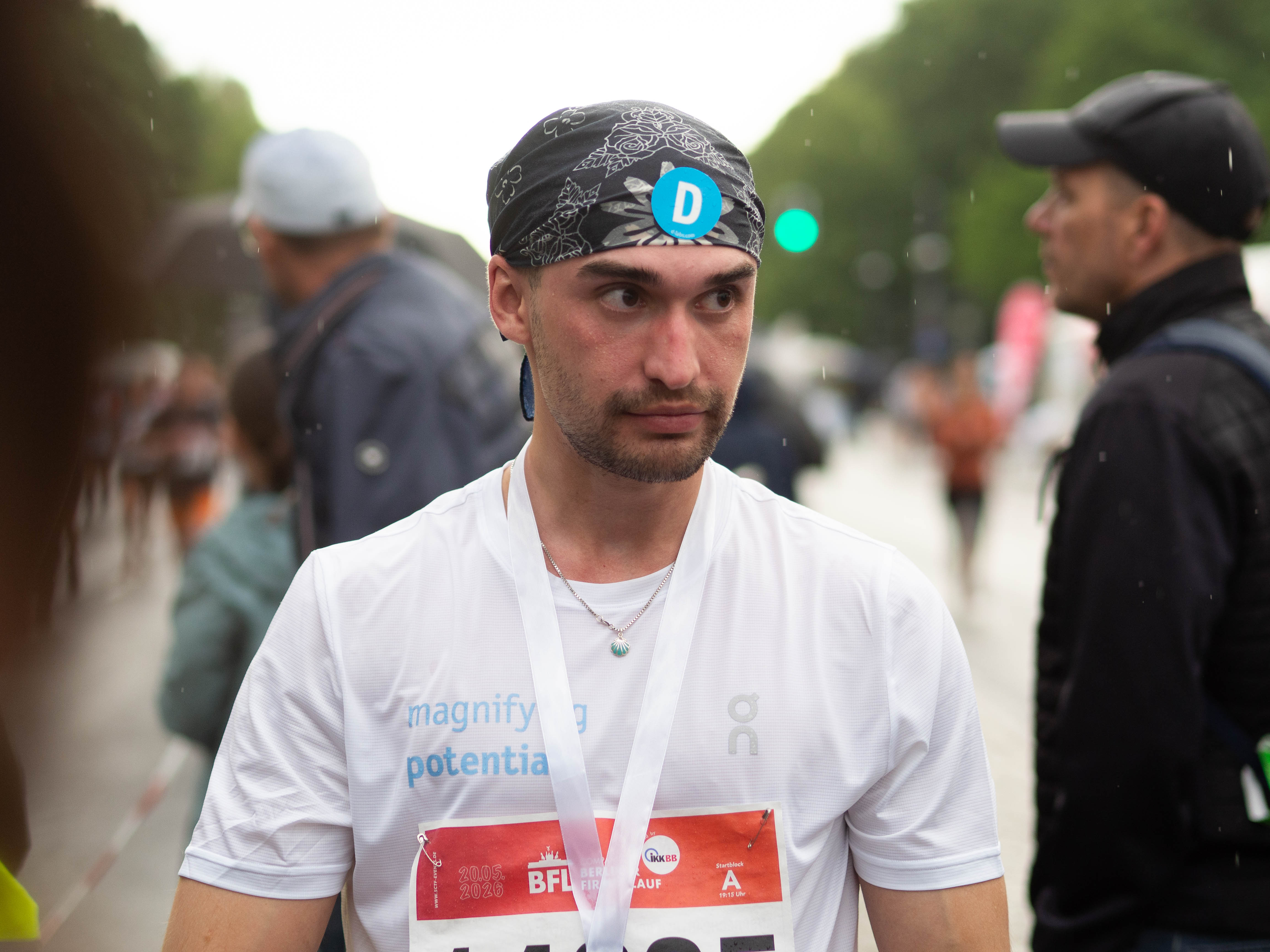
A D-LABS tradition since 2018: The Berlin company run. Fynn ran for us this year!
It’s about finding the right balance – and the flexibility not only to adapt to extraordinary circumstances but to make the most of them. For a little over two years, that has been our exploration of artificial intelligence and its applications in human-centered systems. We don’t have all the answers, of course. In another twenty years, we will look back on 2026 and marvel once again at the tools and methods that are commonplace today. And we will realize: as its core, D-LABS remains D-LABS.
During this anniversary week, we want to take the time and say: Thank you! To our project partners and clients, to our team members and alumni, and everyone who has made us the company we are today —thank you 20 years of D-LABS!

Contact
14482 Potsdam
potsdam@d-labs.com
10245 Berlin
berlin@d-labs.com
70173 Stuttgart
stuttgart@d-labs.com